Episode Transcript
[00:00:00] Speaker A: A lot of investors, you know, they jump into joint ventures or they'll, they'll jump into an LLC or you know, a sort of a marriage with someone very quickly they don't understand what they're doing. What are some of the biggest structuring issues that are missed and that can blow up these partnerships and end up in litigation in court? What are some of the biggest things you've seen there? Foreign.
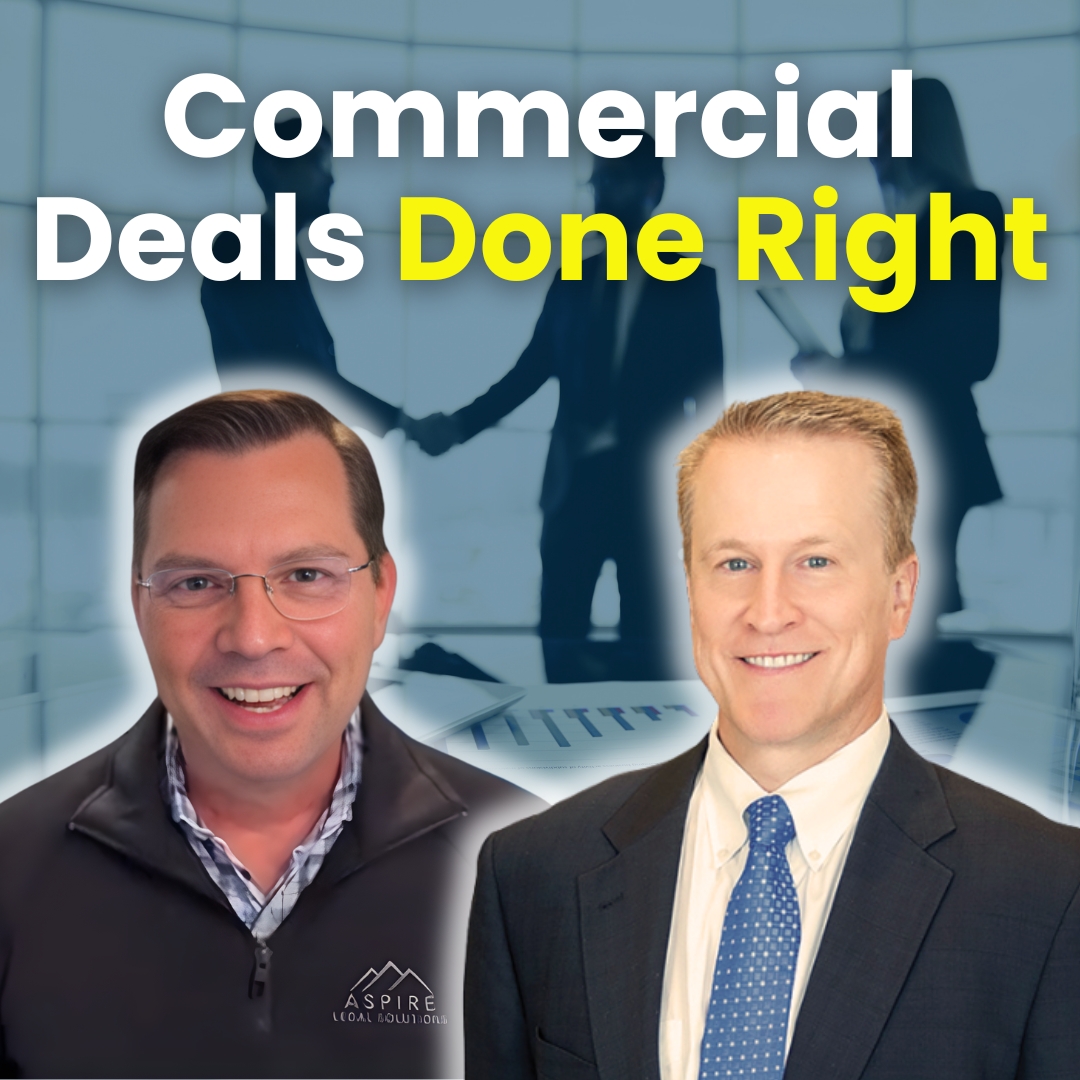
Hey everybody and welcome back to another episode of Trust this. Today we're going to be talking tactics and strategies with our guest Richard Crouch, who is a principal at Woods Rogers and one of the most respected commercial real estate attorneys in the country. He's advised sponsors, operators and investors through complex joint ventures, capital raises, high stakes negotiations and disputes, all with a practical, plain spoken approach that cuts through legal noise and gets to what actually protects your assets. In today's conversation, Richard's insights will give you a new framework for creating better partnerships and building lasting wealth. For all of our real estate investor clients who are out there, we've got quite a few who are in the multifamily space, a lot of people who are in the public storage area, some people in to shopping centers, parking lots, laundromats, you name it. We've got real estate investors out there who do it. So Richard, I want to welcome you in to the show today and thank you for coming in and sharing what your knowledge is with our great listeners out there.
[00:01:35] Speaker B: Well, thank you so much. Glad to be on.
[00:01:38] Speaker A: Well, you've spent about more than 20 years helping entrepreneurs and investors structure commercial real estate deals. What is one mistake you see people make over and over and what does the right way look like?
[00:01:52] Speaker B: Would say. And you know, one thing I'd say there probably are three that come to mind, but I'd say the one that comes to mind the first is just failing to properly memorialize the deal. Because when a deal starts and you found that deal and you're raising equity, everybody's so excited the deal can't miss. You know, it's like, it's like falling off a log. Nobody wants to talk about the hard stuff on the front end. And so sometimes when an asset starts to underperform, that's when things can get incredibly uncomfortable and adversarial between an investors and the sponsor of the deal. So the one thing that we always recommend, particularly if you're raising equity for a transaction or putting a deal together, is to make sure that you not only have that private placement memorandum as well as any teasers for your investors, but that you properly have the operating agreement drafted as well as the subscription agreement, and basically disclose any fees that you plan on taking, whether it's a guarantor fee, a refinance fee, a disposition fee. It's far better to disclose all of that on the front end and make it clear to your investors that that's your expectation so that there are no surprises down the road. But the operating agreement is also critical because it's going to explain in more detail the waterfall distributions, how proceeds are going to be allocated amongst investors, as well as what some of the governing mechanisms are for how decisions are made, how much discretion does the sponsor have, when does he have to get the approval of investors and issues along those lines? And it'll also have some mutually protective provisions in there in terms of these preliminary materials, like the subscription agreement and the operating agreement, because it will also have disclaimers that make it very clear to investors that they could lose their entire investment. You know, it's the expectation and the forecast that the asset will perform well, but the complete capital contribution could be lost by investors. And it's very important that sponsors include all of those disclosures as well.
[00:04:01] Speaker A: Yeah, I've got a couple of cases right now going where it was the borrowers, I represented the borrowers in the real estate side of it. I didn't represent them in the actual putting together the PPM and all that, but they, with the flash crash of 2022, with interest rates that shot up and then insurance rates have shot up a lot more than anybody expected in here in Florida. And also tax real estate, property taxes have increased so much that their exit strategy was to sell or refinance the property. And then they got to a point where they, they just couldn't because the insurance, no one wanted to buy it. It just didn't, it didn't work out. The deal doesn't work out for any potential buyers, then they go to refinance it. The interest rates are much higher than they were. And I feel bad for the sponsors because the sponsors are going, but I promised these people an X percent of return. I said, I hope you didn't promise anybody anything like that. And right now they're fighting just to be able to return the principle that these, the capital investment that these investors made. And truly, I mean, in defense of the sponsors, I know they really do feel horrible about it.
But it, but it's like you said, if you've got the right documentation out there, at least legally, you're covered. You may feel horrible morally from a moral standpoint or like a failure. But hey, it happens. And this is the con. These are the hard conversations I've been having with clients for the past two years, is like, hey, not everything works out right the way you want it to. And that's why people want these, this, this paperwork. That's why you need this paperwork. Right.
[00:05:38] Speaker B: These are definitely the moments when our clients learn the most, as well as young attorneys that I train too, because they really do see what, what can go wrong when it's not an ideal environment.
[00:05:48] Speaker A: And I think that's the biggest thing. So many lawyers, so many people, they've only lived through the good times. A lot of people don't remember the Great Recession. They don't remember the early thousands. They don't remember the recessions we've been through because they didn't go through it. And I remember when I was young, I used to say, real estate always increases in value, it never drops. Well, now we, now I know. Now we know. But, but that's, that's the paperwork you're talking about. You've got to have that in place to make sure you're going to, you're going to be covered.
I saw a lot of folks, a lot of sponsors got sued after the Great Recession by their investors because they said, hey, you didn't explain this, you didn't put this in writing to me that this could happen.
[00:06:31] Speaker B: Right? So, yeah, right. And I think some of the secondary and tertiary things that I see mistakes being made is particularly with some of the younger promoters or sponsors, they don't want to admit when they don't know something or when they're basically outside their expertise or their wheelhouse. And that's one bit of advice that I oftentimes give, is make sure you've surrounded yourself with very good advisors and don't be afraid to learn what you don't know. You know, have a good tax advisor, have a good attorney, have a good property manager as applicable, and because they'll continue to look out for you and you'll basically have a lot more of an ability to succeed if you begin to trust in those other individuals. And one of those individuals would also be finding a good mentor who's made mistakes of the past and might be able to help you streamline the mistakes that you made. So maybe they're not as prolonged or as severe, but lots of times that advice as to mistakes that some of the more senior folks have made are incredibly valuable.
And then I think the last thing, and this is a lesser point, and you may have run into this issue as well, is oftentimes people definitely want excellent legal advice and guidance. They don't necessarily have a barometer for what it costs. And so oftentimes there's an instinct to go cheap or to try to handle it themselves. And we've heard many times where somebody might have a cousin that's a personal injury lawyer or something like that, and in their mind they think, oh, a lawyer is a lawyer, he can handle this. But in some of those cases, you might as well be unrepresented because you really need to have somebody who specializes in that area and knows what issues can arise and how to advise you accordingly.
[00:08:11] Speaker A: Yeah, that's, that's one of the big things I tell everybody. They come to me and say, hey, I want to bring in some investors to help me do this project. And I go, are they going to be passive or are they going to be active? Oh, well, they're just. No, they're just putting up money. I go, I'm not the guy. I don't do that. You have to go to a lawyer, a lawyer who understands that, because it's a whole special area of the law that, that very few people I know do well.
And you're right. It's. It's like Kiyosaki said in rich dad, poor dad. It's if you, if your lawyer, if you're a broker, if you're cpa, if you're a financial advisor, if they're good, yes, they may be charging you, but the, in the long run, they will make you more money or they will at least save you a lot of money over time for what you have paid them in comparison to what you've paid them.
[00:09:03] Speaker B: Yeah.
[00:09:04] Speaker A: So I'm always telling people, I go, don't go cheap. And a lot of times when these people do come in, they say, okay, well, here's our llc, and now we're going to go buy this property. I glance through it and if I see, okay, yeah, there's the ppm, here's the sponsor, here's this, here's that. I go, okay, they've at least had an attorney who's put this together. What scares me is when they go, no, I didn't have an attorney do it. I just took another deal. My mentor and my friend gave me another deal that they had done. And I just scanned in the documents and had AI change all the names. And I'm like, oh, no, no, this is not going to work. You can't do this.
[00:09:39] Speaker B: It can definitely be hard to quantify and have others appreciate the value of risk avoided.
It's definitely very intangible until you're stuck in it. And then maybe that one lesson teaches you to kind of reassess the importance of good advice and good counsel.
[00:09:54] Speaker A: Well, and that's my thing, I guess. I have seen the ones that did go sideways where that sponsor did just get sued into the dirt. And not only sued Civ, but then they've gone so far as they're being investigated by the criminal divisions of various state agencies going, what did you not do? Because we've seen so many complaints come in, we're now investigating you from a criminal standpoint. And that gets ugly really fast, particularly
[00:10:22] Speaker B: once securities are involved, because a lot of people don't realize that technically when you're raising money for a deal and you're issuing membership units and so on, you're creating securities. They might not be publicly regulate or not publicly regulated, but they may not be publicly traded. But you're still subject to a lot of those rules and regulations, which people tend to overlook often as well.
[00:10:43] Speaker A: Well, and that's another thing, is just how you define securities. A lot of people go, well, I'm not, I'm not selling, I'm not selling securities. I'm just going to give them each promissory notes. And I go, you could be in the same thing. You could be doing the same exact thing right there by accident. You could fall into that trap. So go to someone who understands this and get it done right from the get go, or you will be in very deep trouble because you don't know what you don't know. Which takes me to mentor. You talked about mentors, and I see this as well, that a lot of people go, well, my mentor told me this. And I go, who's your mentor? And they'll tell me the name. And I go, I have no idea who this is. I've never heard of them at all in this space. And I think they're, and we say it's about lawyers. Just because you have great marketing or you have a lot of personality pull does not mean that you're good at what you do. And a lot of these mentors, I think have the flash, they have the Instagram account, they have that, that, that pull, but they really don't have the experience and the knowledge. And how, what are some things that you would tell people to look for in a mentor when they're, when they are picking a mentor if they want to get into this playing the bigger game?
[00:11:54] Speaker B: Yeah, I would, I would say to the extent you can assess whether you have similar core values and having some candid conversation and definitely to know the people, what they value, what their big why is in terms of success and how they want to live their life and what their end goals are rather than, I mean, obviously making money is important, but also your reputation is your currency and does the person have a good reputation? Are they honest? One thing I tell, and this could apply to mentors, but I think of this kind of in the sponsorship context is you may have documents in your operating agreement or your subscription agreement where maybe you aren't technically liable for the loss of their investment, but it's best from an optic standpoint to act as if you are liable because it definitely preserves credibility in the long term if you have a long term view of success. And so I would say basically having that long term view in terms of the big picture is very important as well. Rather than trying to get rich quick. And also somebody who values the relationships that they form not only with vendors but with advisors and so on, and recognize the value, what they have, making sure they pay their professionals and just that they're honest all around because it definitely gives you a sense of whether you can trust this person in the long term and whether their advice is valuable.
[00:13:21] Speaker A: You said a triggering phrase there. Get rich quick. For me, I, I hear that all the time. And, and I really think a lot of the younger investors and entrepreneurs, they see Instagram, they see all these social influencers and they think, oh, I can do that too immediately.
There is no get rich quick anything in this world. It's, it takes work.
These people who go, oh look, I made, you know, $10,000 a day just posting memes on Instagram and I'm, and I'm a multimillionaire, all that kind of stuff. I always tell everybody that's not real. To get rich takes time. It takes a lot of time. Risk assessment, risk avoidance and just work. You've just got to work at it to get there. It's not fast. It is not.
[00:14:08] Speaker B: And boring can be good. Boring can be the key to financial comfort.
Time and not being flashy can definitely be a recipe for success as well.
[00:14:19] Speaker A: Yeah, when I see the 28 year old driving around in the Rolls Royce SUV, my radar goes up and I, because I've seen it so many times in my, my history and I know ultimately they're doing something that's probably wrong and they are going to get themselves in a lot of trouble or they're living on credit to the extent that they're going to be bankrupt pretty soon, they're, they're spending too much too fast and they're not going to make it. So that's, those are some, you know, quick tips always give everybody.
[00:14:50] Speaker B: We saw one recently of a fairly young sponsor who was starting to raise money.
But on their website they were all pictures of them standing in front of sports cars and all of them had basically self designated titles. Not CEO, not president, but things like dream maker or facilitator or deal maker. Almost as if it was a handle for like a pro wrestler or something like that. It just, it was something somebody advise them quickly saying you may want to rethink that approach. And I revisited their website and all of that, all of that fluff is gone.
Good.
[00:15:26] Speaker A: Hey, a lot of investors, you know, they jump into joint ventures or they'll, they'll jump into an LLC or a, you know, a sort of a marriage with someone very quickly. They don't understand what they're doing. What are some of the biggest structuring issues that are missed and that can blow up these partnerships and end up in litigation in court? What are some of the biggest things you've seen there?
[00:15:52] Speaker B: Yeah, it's a great question. And we're seeing some of this play out now in joint ventures we've seen because again, a lot of trust is on the table at the beginning of these. And when these assets are not performing, that's when you really drill down into those documents to see, okay, how can we regain control of the situation. But one of the areas that's the most important that oftentimes people tend to overlook is okay, how are, how are decisions going to be made? A common joint venture structure we see is where you maybe have one entity that's really taking the lead, maybe coordinating the financing, handling the purchase and sale agreement, and then the other joint venture partner maybe is providing the equity for the deal and taking somewhat of a backseat. But that equity participant and basically the sponsor of that equity group still has a fiduciary duty to their investors. So they still have to do their due diligence. They need to insist on regular reporting from basically the lead joint venturer, I would say no less than fiscally, that talks about basically net operating income and debt service and existing reserves and whether they're basically meeting their targets in terms of satisfying returns as well. And there need to be certain things where the joint venture can't just have carte blanche authority to do everything. Maybe there can be a lot of streamlined things day to day that they handle to have things go more efficiently. But the major decisions like sales and refinances, filing for bankruptcy, things like that need to basically be subject to at least super majority consent amongst the co venturers. So that's just another critical thing. But constantly evaluating the budget as well. Having the budget approved on the front end is also crucial. And then I would say one other thing that needs to be clear is how capital calls are handled. A lot of people don't want to think about additional capital being required down the road, but it's particularly in this day and age it's become pretty common to have capital calls, particularly if people are in certain asset classes, maybe like office, where there's a need for that, to basically avoid foreclosure with an existing lender because maybe a maturity date has come and gone or they're suffering from a breach of financial covenants as well and they need an injection of cash to make the property viable. That's another aspect and one other component. Again this is still the joint venture structure I'm thinking of with a lead co venturer and maybe an equity co venturer is to basically have metrics of performance because that's another area that people tend to gloss over. So one other component that people tend to lose sight of or fail to track is really what the performance metrics are. And sometimes it's good to have objective criteria. For example, if a preferred return isn't satisfied maybe two fiscal quarters in a row, to basically have the lead venturer confirm it, acknowledge the issue, provide a business plan for how they're going to remedy the issue. And if they fail to do that or fail to do that after a certain period of time, have mechanisms where control can be regained by the remaining investors so that they're not simply held captive by an underperforming property. And there probably should be some mechanism that clearly says that basically if a sponsor has a subordinate return or sweat equity, that maybe they toll any payments to themselves during that period. I mean that's something a good sponsor should do anyway from an optic standpoint. But it would be good to have language to the effect that the equity participants get paid their preferred return first before any of the subordinate returns get paid.
[00:19:35] Speaker A: So you're known for making complex legal frameworks accessible to everyday wealth builders. I want to turn this we talked about from the sponsor side, from the formation side over there of the investor who's, who's doing that. What about folks who are being asked to invest in these projects? What are some things that they should understand or must understand before they sign on and put any money into the deal.
[00:19:59] Speaker B: I would say the most fundamental aspect of that, and hopefully this is disclosed conspicuously in the investor materials that they receive. But they need to know they can lose everything.
It is not necessarily a low risk investment.
Some are higher risk than others. But their initial capital, and sometimes it's six figures, it could be 100 or 200,000.
If a property is underperforming, very rarely our sponsor is going to step in and pay everything to avoid any sort of foreclosure. So there may be a situation where they end up giving the keys back to the lender. And investors have to have a lot of trust with the people that are managing their money in that respect. And so that's probably the most significant thing I would say, related to that.
They need to also know that sometimes contributing that additional capital may also be necessary. So Sometimes the first 100,000 that you contribute, or maybe it's $20,000, it depends on the deal, you may be kicking in another 50,000 so that you don't avoid your initial contribution and that you can basically preserve the asset for the long term and hopefully either refinance out of it or sell it and capture all your returns as well as your initial capital. So I would say that's probably the most significant thing and the most straightforward thing that investors need to realize.
[00:21:22] Speaker A: Now. Disputes happen. I've had cases where the investors have gotten mad at the sponsor, sponsors have gotten mad at the property manager. Everybody's gotten angry with whatever some investors have said. I just want out. Take me out now. What are some of the most common sources of the disputes that you've seen, and what are some contractual or terms tools that can be used to prevent those or at least deal with them when they do come up?
[00:21:48] Speaker B: Yeah, typically it's, it's basically having a lack of information or language that contemplates what happens when things go. But, but in general, when there's not language that addresses what happens if something goes wrong. And I use the example of failing to satisfy returns for a certain number of months and basically having those mechanisms in place. And how do you assess whether the manager or the sponsor is properly performing when basically the asset's not performing well, that's where we tend to see the most significant issues. And so you have investors saying, okay, either when am I going to get my returns? Or how am I going to get out of this transaction? And so, and that's, that's why exit strategies are so important to have in your operating agreement. Because sometimes you'll have defined points in time, such as a sale or refi, maybe part of a 1031, that there's a date certain that investors know they're going to get their capital back and any returns.
But there's certain unplanned events that need to be accounted for as well. And so that can be the death, the disability of a member, a bankruptcy, or just because the asset is not performing as expected, just being able to get out of the transaction. And so a well drafted operating agreement is going to have provisions for that. Basically your typical buy sell provisions that basically go through the valuation of the interest.
Who has to be notified before an investor can sell their membership interest? Does the investor have the right to purchase the interests of the manager or vice versa? There'll be a lot of provisions along those lines and there usually will be restrictions on who it can be sold to as well, because most of the players involved are going to want to retain control of that asset. So usually it's going to be a scenario where the membership interest is being either sold back to the company through or redeemed by the company or sold to the other members pro rata. So those are some of the provisions that are definitely very important to have in there that can hopefully avoid disputes between investors and sponsors.
[00:23:58] Speaker A: Now you've helped a lot of clients over the years navigate issues with capital stacks, commission protections and financing risks. What hidden clauses or overlooked documents have caused the most trouble in high stakes transactions like that?
[00:24:15] Speaker B: Yeah, I would say the hidden issues or hidden costs or complications that can be run into that oftentimes people discount tend to fall under either the just the world of financing, maybe structural issues or maybe even operational issues. So for example, like when dealing with a lender and obtaining financing, it's important to know that in most cases the borrower is going to have to pay the fees of the lenders counsel. Because pretty much lenders are not going to want to be incurring many expenses on their own behalf in order to complete the transaction. So a lot of the lender's due diligence costs, whether it's through their attorney or having environmentals done or appraisals done, they're going to be passing that all to the borrower.
Some of the other things to consider from the financing standpoint, to be aware of where this is addressed in your loan documents, is if you do want to exit from the asset, either through a refinance or through a sale, you'll need to have a feel for what the prepayment penalties might be if you pay it off prior to maturity.
Because oftentimes lenders have contemplated a certain return on the money that they're lending out. And if you're basically exiting early in their mind, they're going to want to be compensated to some degree for that. And some of the more complicated financing actually has, you buy basically replacement securities to basically compensate them for the loss of that longer term income. And one other thing to think of in the financing world is the more complicated the deal, you may have issues with certain reserves that the lender wants to have in place. These could be for capital expenditures, these could be for deferred maintenance. These could be for some event that hasn't occurred yet. Like if there's a major tenant in a building and they have an option to terminate, that's coming up in like a year and a half, sometimes the lender's going to want to escrow money for that as well. And so these are all things that can actually eat into your returns if you're simply basically having to put money in an account to address these and you're not able to otherwise use those funds for the property. So those are some of the things that you see in the financing world in terms of some operational issues. This is part of the due diligence that a lot of investors don't get into.
But it's good to be aware of is with leases that basically are your rental income.
One of the most key aspects of owning the property, reviewing the leases to see what some of the landlord concessions are, because those are other issues that can come up as surprise expenses that people don't forecast if they're not aware of them. So these can be leasing commissions for renewals of certain leases.
They can be tenant improvement allowances that tenants are entitled to that basically the landlord will be paying that can eat into returns as well, as well as any sort of concessions like free rent to basically incentivize and attract tenants for the space as well. Those are expenses that oftentimes investors don't necessarily consider. And I would say that the last issue is just making sure that you have a feel for all third party costs upfront, particularly from your lender, so that you're not again surprised when you're reviewing the settlement statement. And there are a lot of third party fees that appear on the settlement statement that you're going to be responsible for.
[00:27:35] Speaker A: Yeah, you mentioned prepayment penalties. I've had clients who are getting a loan in a transaction and I'll ask Them, you know, well, what are the basic terms? And they'll tell me. And I go, well, what about a prepayment penalty? And they'll go, no, no, there's no prepayment penalty. And then I'll look at the terms letter, the loan terms letter, the loi, and it'll say defeasance clause. And I go, I thought you said there was no prepayment. And they go, well, that's not a prepayment, that's a defeasance. And I think it comes down to yes, it's even worse. And I think that's, that's one of those things of not knowing what you don't know. So then we have to explain what the defeasance is. And then after they get over their nausea, they feel a lot. At least they understand how bad it's going to be.
[00:28:24] Speaker B: Yeah. And one thing that I failed to mention too, for investors, this is another issue of accountability with the manager or the sponsor is just knowing what the various fees are going to be. Are there going to be asset management fees, property management fees? And because that's pretty common too. I mean, oftentimes they'll get their sweat equity percentage, but oftentimes they'll have basically flat fees for certain events that occur too. And that just needs to be one of those things that investors are aware of that are going to be a line item that's going to eat into returns as well. And then one other thing with the financing is if there are certain reserves or holdbacks that are required for any, any host of issues, what are the mechanisms for getting those funds released maybe once a certain condition's been satisfied as well, so that the, the manager can start to use those proceeds to operate and improve the property.
[00:29:15] Speaker A: Okay. Okay.
Well, before we go, there's a couple of things I want to ask you. Number one, I see it looks like ribbons or metals hanging in behind you. What is that?
[00:29:27] Speaker B: Those are actually.
So if you look over, I guess it would be my. Over my right shoulder, but those are all marathons that I've run. And I actually have a corner office, so I actually, you can only see part of it. There's a whole other wall that's like all windows that, that has metals over here too. So I start with the big ones, the full marathons, and then, and then the half marathons and so on. And my, my wife and I are involved. We. I thought I was a runner before I met her. And I realized it was. I was a amateur at best and, and now I'VE run. I've been with her about 10 years and I've probably run about 30 marathons. And we're part of a group called Team Hoyt and it's inclusive racing and they're duo team. So most of these are people with special needs. Most of them are children who can't necessarily run the race on their own. And so we have specially designed racing chairs that we push them in. And so the idea is to have them involved in this exciting event, have crowds cheering their name and, and it was started by Dick Hoyt. That's where the Team Hoyt comes from. And he's someone who's run hundreds of marathons. He has sadly passed away, but he was recognized by espn. He would always push his son Rick. And that was, that was the mindset was basically inclusive racing. And it's, it's incredibly impactful and meaningful and it definitely adds an additional layer of motivation to every, every race we run. Not just to finish the race with your rider, but you also just get to know the families so well and get so well connected to that community. It's. And now I can't picture running a race any other way. But we've, my wife and I have, we do a lot of races in Virginia, but we've, we've been all over the world doing the same thing. And we've been in Belgium and we've run the Athens Marathon and sometimes we don't push a rider. We actually will help guide maybe a low vision runner or somebody who maybe can propel themselves and is ambulatory, but they have limited vision or maybe a brain injury or something where they need assistance. And so we'll guide them. So we've done that in places like Berlin and all over the world and it's just been, just been incredible. And it's really only something I've been doing the last 10 years or so, but I feel like I've gotten 30 years of just memories doing it. So it's very, very lucky to have discovered it.
[00:31:47] Speaker A: It sounds like you're definitely a person who helps others aspire to a.
But who is someone who has helped you aspire to a better life.
[00:31:58] Speaker B: I would say this goes back to our conversation or touching on mentors and when I started as a young attorney and it was, gosh, it was almost about 25 years ago, I had two mentors that were incredibly busy in the commercial real estate. So this was, this was early, just early 2000s, 2000 in fact, and it was kind of on the upswing before the great financial crisis and we're busy as can be. And one of my mentors was very good about the technical issues in terms of advising you what to look out for, what not to miss.
And the other mentor, and this is the one I'm thinking of, was really great at teaching me everything else, everything they didn't teach you in law school. And he wasn't all about the details. That was my other mentor. But he was very good on the practical advice, how to attract, retain and manage clients, how to communicate with clients, you know, answer their question, don't waste their time.
[00:32:54] Speaker A: Well, that sounds great. Richard. I want to thank you again for coming on. We're going to put your information for Woods Rogers in Norfolk and Richmond, Virginia for commercial real estate, very complicated deals. If you're looking for a great attorney to help you out with that, Richard's your guy to call again. We'll put that down in the in the show notes. I will link down there for you on everything. And I want to thank you again for coming on Trust this today.
And until later, everybody have a great day and Trust this. Thanks for listening to this edition of Trust this. If you got something out of it, please press like and subscribe and give us a five star review to help us reach others who can benefit from this series.
Until next time, keep aspiring to a better life.